
Therapy
Director of the Therapeutic Sector: Athanasia Kakouri-Basea
Deputy Director: Konstantina Latsona
The therapy is aimed at individuals of all ages who are facing any kind of psychological problems. The only condition is that they come of their own free will. The Therapeutic Sector contributes greatly to the adequate clinical practice of the students of the 4 Institutes. It is also a suitable field for
research and the application of new ideas and schemes!
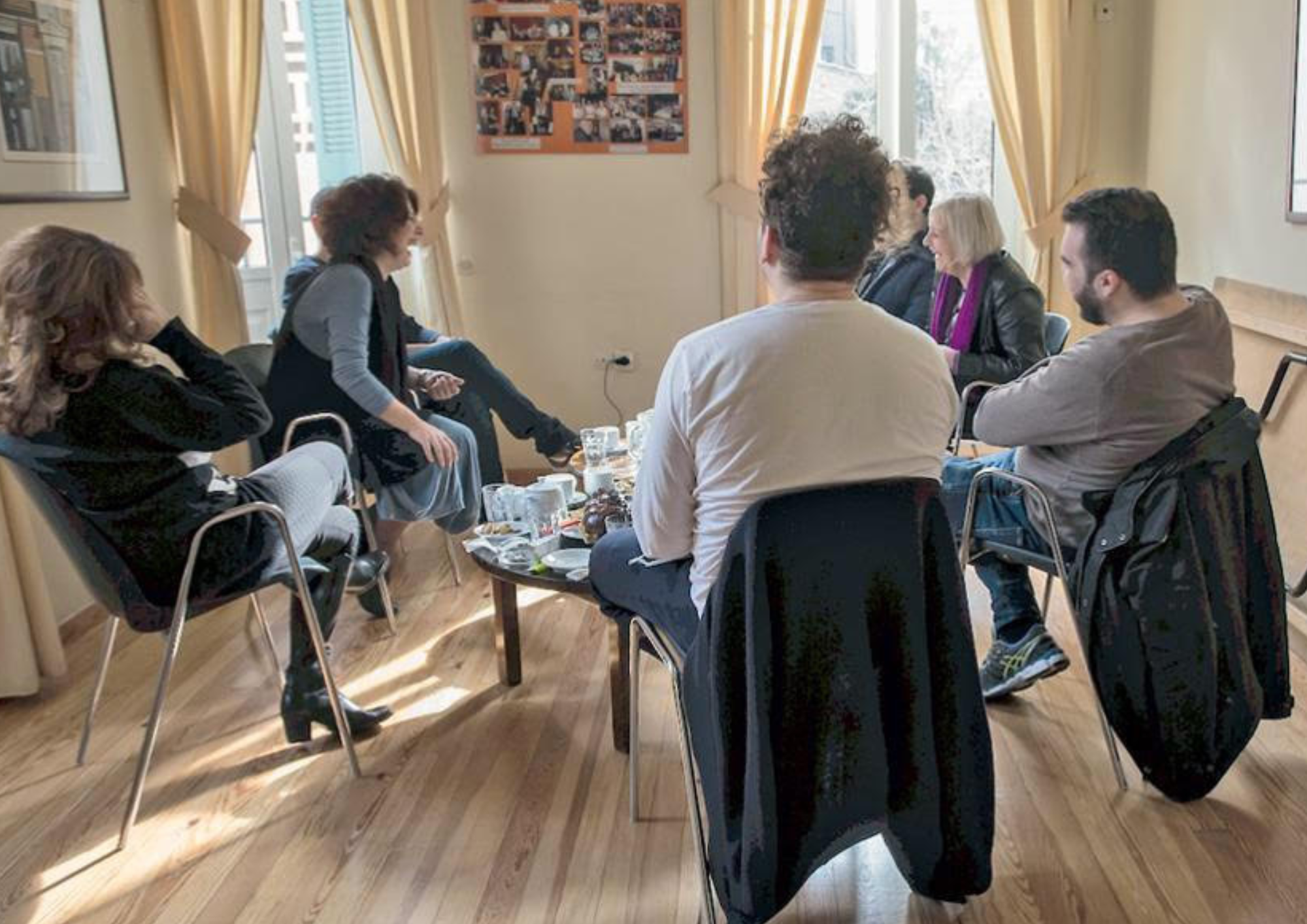
Adult Therapy Department
Coordinator: Georgia Arachovitis
Co-coordinator: Helena Maousidou-Zirganou
The Adult Therapy Department is addressed to individuals who are experiencing psychological problems of any type, provided that they come of their own free will.
-
First Meeting and Diagnostic Period
The diagnostic period aims to form a comprehensive assessment, in order to formulate a therapeutic proposal. It includes:
First Meeting: lasts one hour and during its duration an initial assessment of the problem is formed while, at the same time, the interested party is informed about the services provided.
Psychiatric Assessment
Psychological Assessment: administration of psychological tests, with the aim of assessing the personality as a whole, through structured questionnaires (MMRI, Eysenck, CRI) and projective techniques (Rorschach, TAT, CAT, Rotter), as well as its individual functions (e.g. intelligence: W.A.I.S., Raven’s PM), etc. Vocational Guidance tests are also administered to adolescents and young adults.
Family Assessment: meeting with the immediate family environment of the person concerned.
-
Dyadic and Group Psychotherapy: Group Analysis, Psychodrama, Sociotherapy
Dyadic and group psychotherapy is a treatment of choice, and is not simply supportive of any therapeutic scheme.
Dyadic Psychotherapy: It is usually the first stage of treatment, after the assessment period. Each session lasts 50 minutes, is dynamically oriented and its frequency is weekly or fortnightly.
Group Psychotherapy:
Group Analysis: these are slow open groups that operate based on the principles of Group Analysis. The frequency varies (from once a week to once every two weeks) and the duration of each session is one and a half hours.
Psychodrama: these are groups that operate by combining the group process with psychodramatic techniques. Their object is the enactment of situations, life events or even imaginary themes in order to facilitate both the assumption and the abandonment of various roles.
Sociotherapy: a large number of Sociotherapeutic groups, with various activities, operate within the framework of the three Psychotherapeutic Communities.
-
Psychotherapeutic Communities
The Psychotherapeutic Communities (Daily, Fortnight and Summer) constitute an original model of a “democratic type” Therapeutic Community, covering the entire spectrum of psychodynamic and sociodynamic activities. They are adapted to Greek particularities and requirements and have aroused international interest.
The Psychotherapeutic Model of TC was more suited to the needs and goals set for the OPC since its foundation. However, various innovations were implemented right from the beginning, always guided by Greek particularities and the needs of daily clinical practice. The Group-Analytic Model of Therapeutic Community was gradually formed. The influence of Group Analysis and Psychodrama was decisive. In addition, and most importantly, it adopts the principles and characteristics of the Greek traditional communal way of life, which contribute to the formation of the individual and his or her emergence as a “person”, in contrast to the dipole of individualism – collectivism. It thus becomes an “anthropomorphic” therapeutic framework, which favors the cultivation of personal otherness and the emergence and consolidation of the individual as a person. A key feature of this scheme is the use of representative democracy processes, which aim to cultivate the patient’s potential for participation in the functioning of the institution and minimize the passive role.
Why Therapeutic Community:
Flexible and effective approach, combined with other therapies.
Variety of group activities, psychotherapeutic and sociotherapeutic.
Active involvement and mobilization.
Utilization of the healthy functions of the participants with the aim of achieving personal changes.
Indications – Who is referred:
Those who present with any type of mental disorder (anxiety, depression, psychosis, personality disorders). Mainly those that are considered serious, with obvious symptoms, such as isolation, withdrawal, lack of contact with reality, low functioning and do not respond positively to monotherapy (pharmaceutical treatment, dual psychotherapy of any approach).
Who refers:
Psychiatrists, Psychologists and more generally Psychotherapists who assess that their patient needs an additional therapeutic / supportive framework. Systematic cooperation and information of the referrer is necessary. It goes without saying that the patient can also come on his own initiative.
Flexible Program
Participation is adapted to daily activities and needs. Choice between various group activities, which utilize art (music, painting, theater, Psychodrama, etc.), movement (dance, body expression), as well as speech, on a weekly or fortnightly basis. Choice of participation hours, as the Communities operate throughout the day.
Participation Process
Telephone contact of the interested party for the first meeting.
Meeting with the Community Therapist. The appropriate, individualized program of participation in activities with a weekly or fortnightly frequency is jointly decided.
Systematic communication of the Community Therapist with the referring therapist.
Participation of the interested party in community group activities for as long as necessary, with the necessary modifications over time.
Cost
It is known that Group Psychotherapy is not only effective but also the most economically advantageous. The cost of treatment in the Psychotherapeutic Communities of the OPC is particularly low and is formed depending on the number of groups.
Daily Psychotherapeutic Community
Coordinator: Katerina Toutouzi
Co-coordinator: Anna Kalogera
The program of the Daily Psychotherapeutic Community includes a large number of groups (Sociotherapeutic and Psychotherapeutic). The Community operates throughout the working days of the week, except for holidays and vacations (two weeks at Christmas and Easter and six weeks in the summer). The hours of attendance are adjusted according to the needs and capabilities of each interested party.
Fortnight Psychotherapeutic Community
Coordinator: Stamatis Vlachos
Co-coordinator: Christina Kampouri
It proposes an original model of Community Therapy, which consists of Sociotherapeutic and Psychotherapeutic Groups. It operates every fortnight, and the patients attend two, three or more therapeutic activities. It is aimed at those who, either due to therapeutic assessment or due to special circumstances (distance, shift work hours, etc.), do not need or do not have the opportunity to participate in the weekly therapeutic activities.
Summer Therapeutic Community
Operates during the summer holidays and lasts three weeks. It concerns those who need to continue their therapy during this period.
-
Supportive Therapies
Supportive therapies include a wide range of services, which are carried out either individually or in groups, and with a frequency that suits the needs of the interested parties.
Counseling Meetings: these are a limited number of meetings, with the aim of addressing a specific problem, which concerns either the interested party himself/herself or a member of his/her family, etc.
Follow-up: meetings with former patients who, while having completed a psychotherapeutic process, still need encouraging or pharmaceutical support from time to time.
Family Meetings: in parallel with the treatment of the person concerned, meetings are held with the family, either for informational purposes or to redefine the therapeutic goals.
Pharmacotherapy: systematic monitoring and control of the patient’s pharmaceutical treatment.
On-call: outside the working days and operating hours of the O.P.C., there are organized on-call services to address the emergency needs of the Center’s patients.
-
Online Sessions
We consider in-person, face to face psychotherapy as the treatment of choice with significant advantages.
However, in special cases, online sessions are held when access to our space is very difficult or impossible. They usually concern people who either live in remote areas (provinces or abroad) or face mobility problems that do not allow them to move. They are held via a video conferencing platform (e.g. Zoom, Viber, WhatsApp).
-
Family and Couple Therapy
Family and Couple Therapy follows a selective approach, both theoretical and practical, influenced to a large extent by Group Analytic theory. It is carried out with two Family Therapists and organizationally belongs to the Department of Family and Child Therapy.
-
Summer Therapeutic Activities
Summer therapeutic activities
Summer therapeutic activities are carried out during the summer. The Center remains open continuously, with the exception of one week, around August 15th. From mid-July to the end of August, certain necessary modifications are made to the activities that operate throughout the year. The activities in which interested parties can participate are:
- First Meeting and Diagnostic Period (Psychiatric Assessment, Psychological Assessment), both for adults and for parents, children and adolescents.
- Counseling Meetings (individual, family, couple).
- Psychiatric monitoring.
- Dyadic Psychotherapy.
- Summer Therapeutic Community: participation in a variety of groups, with activities and/or discussion, with characteristics of brief psychotherapy. Each member, in consultation with the therapist, chooses the program that suits his or her needs and follows it for a specific period of time (three weeks).
-
Caregiver Group
The Caregiver Group is a supportive therapeutic group aimed at caregivers of people suffering from chronic physical illnesses such as multiple sclerosis, stroke, dementia, Parkinson’s disease, chronic obstructive pulmonary disease, cancer, quadriplegia, etc. Illnesses that make everyday life difficult as they deprive the sufferers of their full functionality, with the necessary consequence of care from someone else. Caregivers (children, spouse, relatives, etc.) are faced with both practical issues, the social and psychological burden of the disease that is developing, as well as the inevitable loss of their loved one. At the same time, caring for a person with a chronic illness greatly affects the caregiver and brings about significant consequences and changes in the functioning and dynamics of the family.
Group approaches offer effective therapeutic interventions, since they base their functioning on specific therapeutic factors. Caregivers often lack training for the role assigned to them and need self-care tools to prevent burnout.
The goal of the caregiver support group is to provide emotional support, manage distressing emotions and anxiety, and provide specialized therapeutic interventions tailored to the needs of the patient’s family, with the aim of maintaining the quality of life of both the patient and the caregiver, as well as the functioning of the entire family.Conductor: Bessy Karagianni Co-conductor: Christos Kanana
Frequency of meetings: Fortnightly
Department of Family and Child Therapy
The Department of Family and Child Therapy deals with problems of children and adolescents as well as with problems of families or couples. It also concerns couples or families, one of whose members exhibits a psychological or psychiatric disorder.
-
Family and Child Therapy
Who it may concerns
- Parents with children or adolescents about whom they are concerned;
- Couples experiencing disharmonious relationships (tensions and conflicts)
- Families with members considered dysfunctional or exhibiting psychopathology.
Who refers
- Treating Physicians, Pediatricians, Child Psychiatrists, Psychiatrists, Psychologists, Psychotherapists and more generally any mental health professional or not, such as teachers, for the purpose of further, thorough evaluation or counseling or psychotherapeutic education.
- Systematic cooperation and information of the referrer is essential.
- It goes without saying that those interested come of their own accord, while children and adolescents must, at least, agree.
How to come
- Telephone communication: The interested parent or non-parent contacts the secretariat of the O.P.C., to determine the First Meeting.
- The First Meeting is held with: The parent couple, without the presence of the child/children; the couple, as long as both partners agree; the entire family or, at least, with all members who are interested, to investigate and address the presenting problem.
- After the expert’s initial opinion is formulated, evaluations usually follow, to confirm or disprove the initial hypotheses.
-
Initial Meeting and Diagnostic Period
The initial meeting and the diagnostic period are necessary to form valid and detailed indications about the nature and severity of the identified patient’s presenting problem, as well as its impact on the wider family system.
Initial meeting:
- The initial meeting takes place with the interested family or couple; in cases where the problem concerns the child, the meeting takes place with the parents; in this meeting, in parallel with the recording of the history, the proposed request is also determined, as far as possible.
Assessment of Children, Adolescents and Parents. They include, as appropriate:
- Individual Assessments:
- Full psychiatric, or child psychiatric or neurological assessment.
- Psychological Assessment of children and adolescents: cognitive (Terman-Merill, W.I.S.C. III, Ravens P.M), school performance and learning difficulties (Athena test), personality (C.A.T., T.A.T., Rorschach, Menninger clinical questionnaires) as well as Vocational Guidance tests for adolescents and young adults.
- Vocational Guidance for adolescents, young adults.
Systems Assessments:
- Family Bonding and Relationship Assessment: Meeting of the entire family (parents and children) with two specialist therapists.
- Couple Assessment
The results of the assessments are communicated to those attending and the appropriate therapeutic scheme is proposed.
-
Child and Adolescent Psychotherapies
Child and adolescent psychotherapies are selected according the type of problem presented. After the diagnostic period, treatment is proposed for either the child, the parent couple, the family, or a combination of the above.
Dyadic Psychotherapy: Meetings with a specialized therapist, which include specific techniques.
Group Psychotherapy for Children (Sociotherapeutic Groups): This involves the use of group methods in combination with expressive and creative activities (games, painting, music-kinesthetic, psychodrama, etc.). The groups are coordinated by specialized therapists and are aimed at children who face difficulties or disorders in development, behavior, learning and adaptation.
Adolescent Psychodrama: These are groups that combine group dynamics with the psychodramatic process (acting out life situations, conflicts, etc.), with the aim of learning and assuming roles as well as strengthening relationships with peers. Psychodrama groups are always coordinated by two experienced therapists and are aimed at adolescents who face difficulties or disorders in adaptation, behavior and socialization.
-
Family and Couple Assessment and Therapy
Family or Couple Assessment: Refers to families or couples with an expressed request; after the Initial Meeting, and if there is an indication for therapy, a full psychological assessment of the family members or only of the two spouses follows, when it comes to Couple Therapy. The family assessment and the couple assessment are always done with two specialist therapists.
Family Therapy: Refers to families that face communication difficulties, conflicts or a specific problem with one of their members.
Couples Therapy: concerns couples who are facing relationship problems or problems with one of their family members.
Couples Group Analysis: these are slowly rotating groups, which operate based on the principles of Group Analysis in combination with the dynamics of the marital relationship. The groups are coordinated by two specialized therapists.
Couples Psychodrama: groups that combine group process with psychodrama techniques and have as their object the dramatization of situations, conflicts and events related to marital and family life, as well as the assumption, learning or unlearning of various roles.
Parents Group: specifically concerns parents whose offspring (children, adolescents or adults) are facing psychological disorders or problems with development, school performance and behavior.
-
Special Therapies for Children
Special therapies concern children and adolescents who face developmental and behavioral problems, learning disabilities, etc.
Music therapy: therapy through music and movement (Dyadic or Group).
Occupational therapy: therapy through creative activity, such as arts and crafts, play, etc. (Dyadic or Group).
Speech therapy: treatment of children and adolescents with articulation, expression, etc.
Special Education: education of children and adolescents with learning disabilities and problems with school performance, adaptation, and behavior.
-
Summer Therapeutic Department for Families and Children
Summer Therapeutic Department for Families and Children: in parallel with the Summer Therapeutic Department for Adults, a corresponding therapeutic scheme operates especially for children or families who need immediate help during this period.
Cookie Consent
This website uses cookies to optimize your browsing experience!
Help us understand how visitors interact with our website.
While we don't currently use advertising, your consent is required for regulatory compliance.
We don't share user data for advertising purposes, but your choice is required for GDPR compliance.
We don't display personalized ads, but your choice is required for future GDPR compliance.